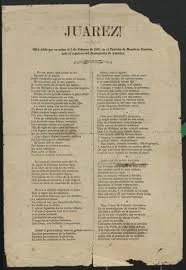
Ley Juarez
Ley Juárez (Juárez Law) was the first in a series of liberal "Reform Laws" enacted in Mexico in the mid-19th century. Promulgated on November 23, 1855, by President Juan Álvarez, it was primarily authored by Benito Juárez, who was then the Minister of Justice. The law was a cornerstone of the liberal movement called "La Reforma" and aimed to reduce the power of traditional, corporate institutions, specifically the Catholic Church and the military, to foster a more egalitarian and secular society.
Primary Provision
The main provision of the Ley Juárez was the abolition of fueros (special legal exemptions or privileges).
It restricted the right of military personnel and clergy members to be tried in their own special courts (military and ecclesiastical tribunals) for civil offenses.
Instead, all citizens, regardless of their military or religious status, would be subject to the same civil courts and laws, promoting the principle of equality before the law.
While it did not entirely eliminate the special courts, which retained jurisdiction over criminal cases for their members at that time, it was a major first step in dismantling the long-standing legal structure that favored the clergy and military elite.
Impact and Consequences
Secularization: It was a critical step in the broader effort to secularize the Mexican state and limit the immense political and economic influence of the Catholic Church.
Opposition: The law provoked a furious reaction from conservative factions, the military high command, and the Church hierarchy, who saw their traditional power being eroded.
Civil War: The intense opposition to the Ley Juárez and subsequent, more radical Reform Laws (like the Ley Lerdo, which forced the sale of Church lands) directly led to the bloody three-year War of Reform (1858-1861) between liberals and conservatives.
Constitutional Basis: The principles of the Ley Juárez were incorporated into the liberal Constitution of 1857, which ultimately provided the legal framework for the modern Mexican nation-state.