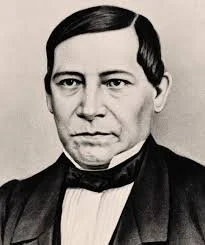
Benito Juarez
Benito Juárez (1806–1872) was a Mexican lawyer and liberal politician of Zapotec origin who served as the 26th president of Mexico from 1858 until his death in 1872. He is a national hero widely regarded as the "George Washington of Mexico" for resisting foreign occupation, overthrowing an empire, and restoring the Republic, thus laying the foundation for modern, secular Mexico.
First Indigenous President
Born into a poor, rural Zapotec family, Juárez was orphaned at age three and didn't speak Spanish until he was 12. His rise to the presidency demonstrated a break from Mexico's aristocratic past and made him a symbol of indigenous rights and social justice. The period of his leadership is known as La Reforma, a liberal political and social revolution. He enacted a series of laws, including the Ley Juárez and Ley Lerdo, which aimed to separate church and state, nationalize church properties, and bring the military under civilian authority. These reforms were incorporated into the Constitution of 1857, which guaranteed civil liberties and equality before the law.
Modernization and Education
As governor of Oaxaca and later as president, he focused on public works, building roads and schools, and promoting education as a means of national progress. He is often cited for his famous quote: "Among individuals, as among nations, respect for the rights of others is peace".